Anne Massoni and Memory in Art

My artwork has often dealt with memory. The memories revealed to me in my family’s old photos are sometimes accurate, and sometimes not quite as accurate as I think I remember. I’ve started looking at other artists who also work with mnemonic and imagined realities. Anne Massoni is one of those artists.

In her artist statement Anne says that her work is currently driven by the act of remembering. Anne imagines stories that have not yet been told or may not exist as she visually navigates these stories in her mind. She presents this place between fiction and truth to the viewer using both created imagery and found imagery. Concepts of memory are reinforced by the images themselves – using notions of artifact and mnemonic elements to represent an underlying story.

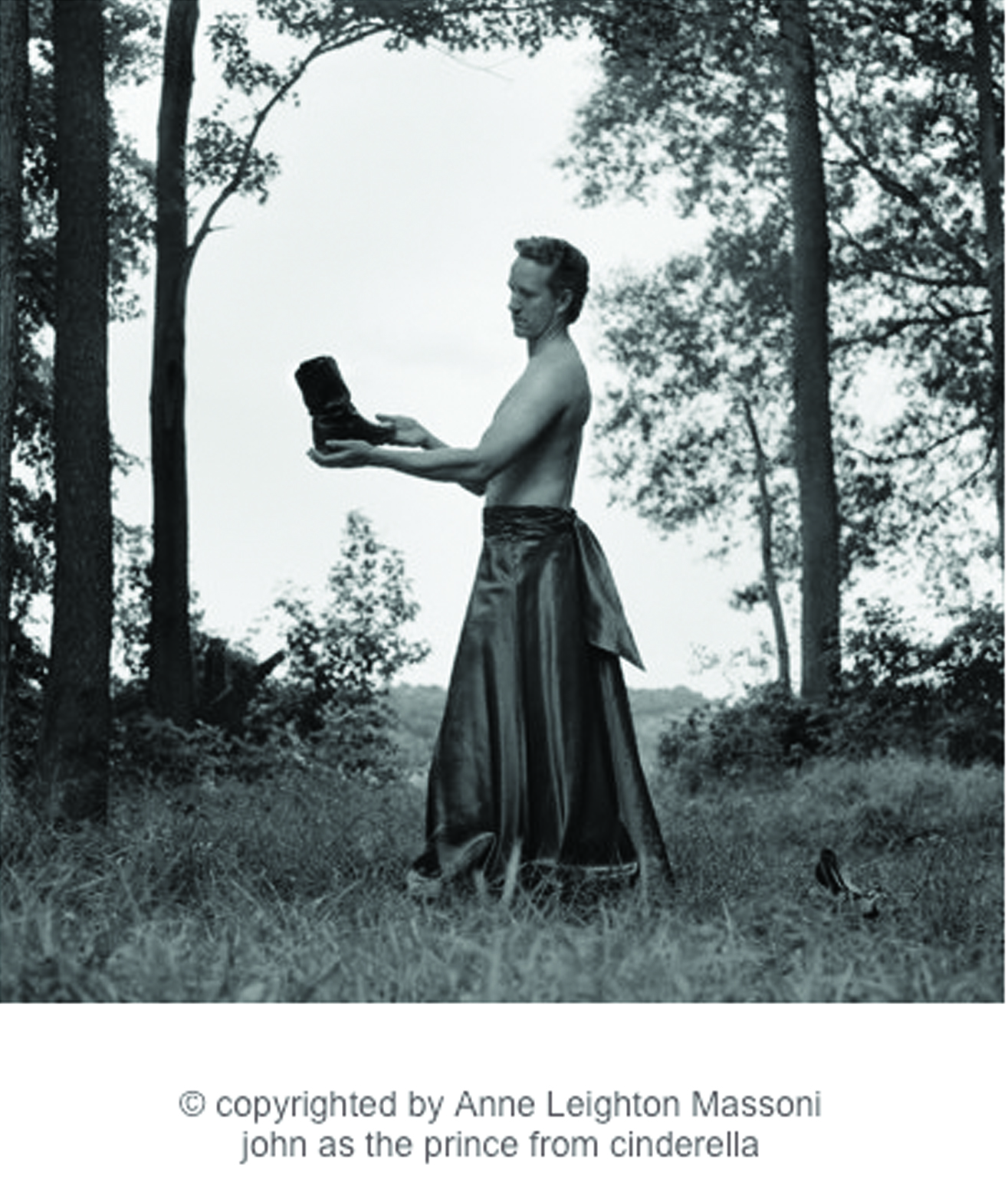
In her “Fairytale Princess Skirt Series”  a beautiful skirt from a Philadelphia second hand shop became a vehicle to the memory. Anne uses the skirt as a constant in her photographs of staged fairy tales.
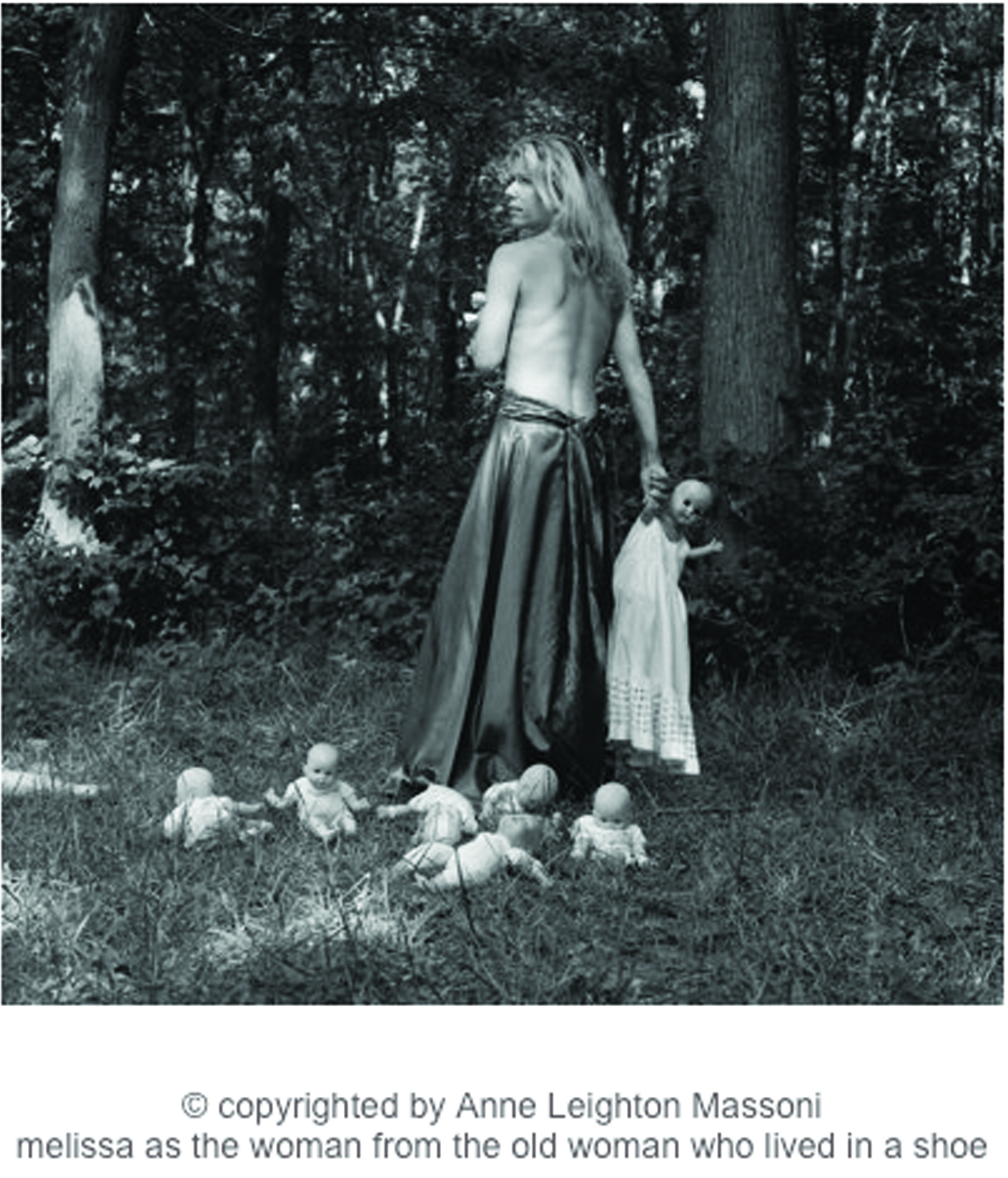
40 inch by 40 inch digital prints show shirtless men and women standing in her “Enchanted Forest” wearing the skirt. In works like “melissa as the woman from the old woman who lived in a shoe” and “john as the prince from cinderella” visions of childhood are associated with her fairytales to be interpreted by the adult mind.
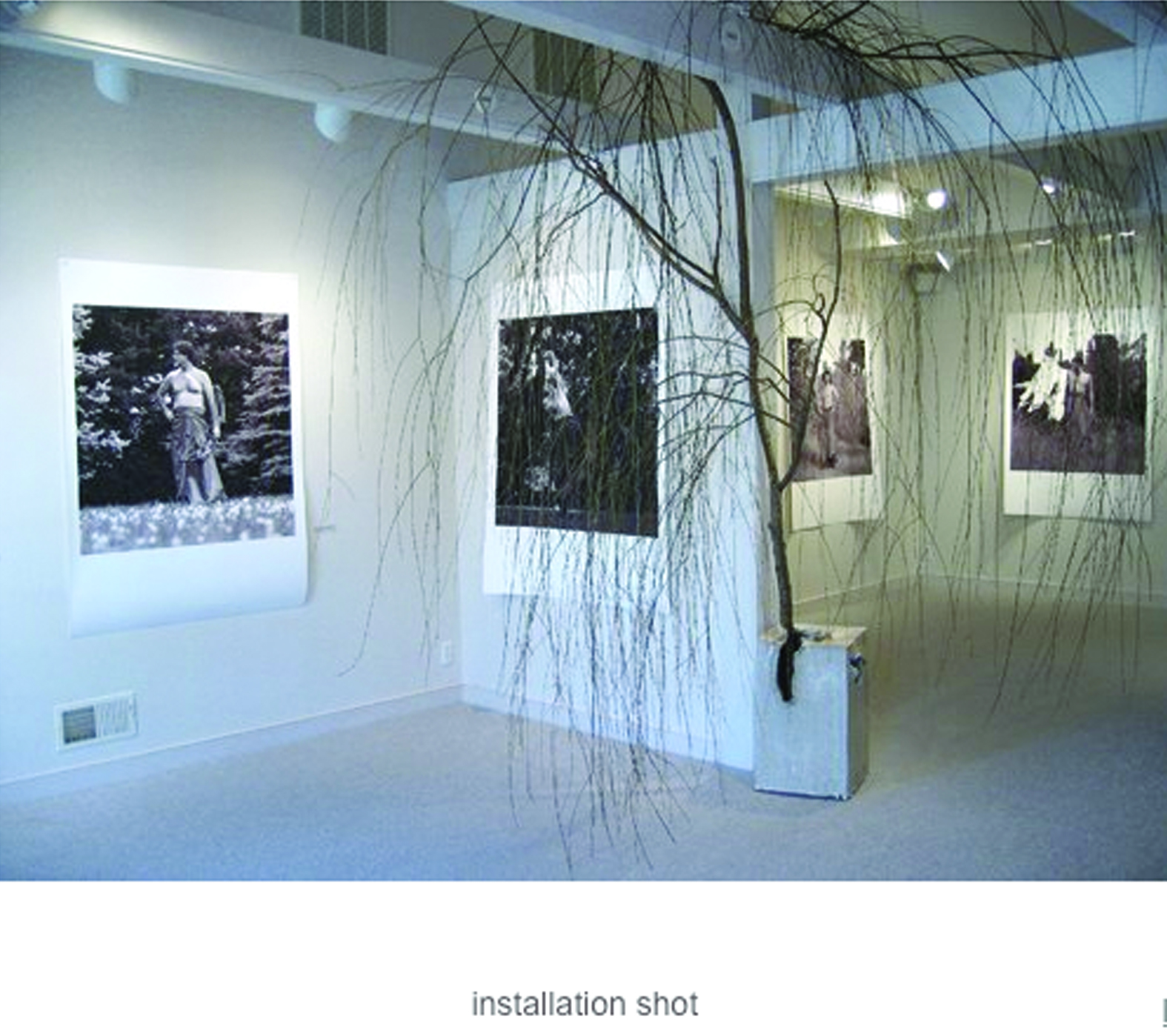
This photo of the installation of the “Fairytale Princess Skirt Series” shows how she includes elements of actual trees and vines with her “Enchanted Forest” location photos.
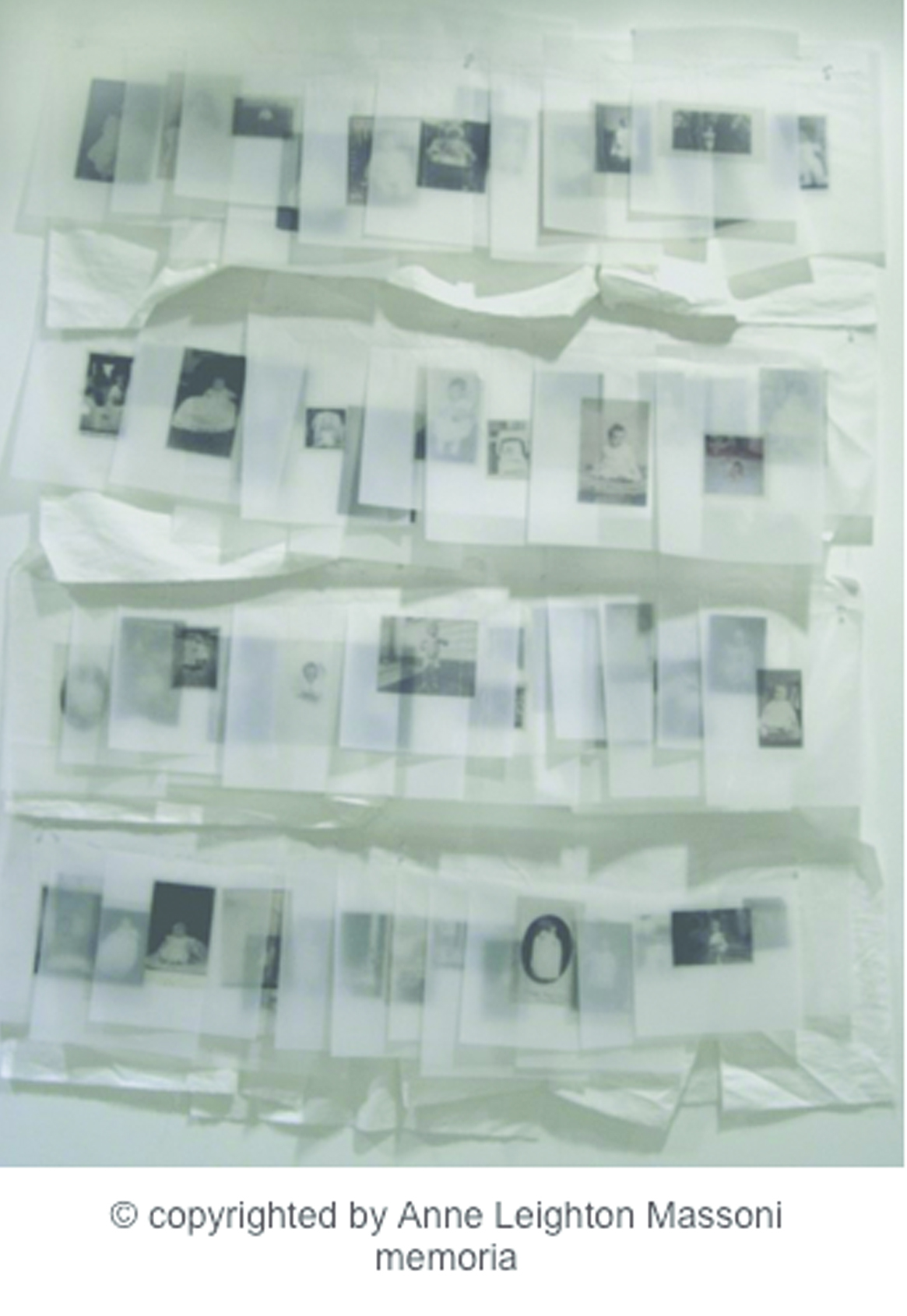
Memories are also interpreted in my favorite series of Anne’s, “Memoria & Mnasthai”. I especially like her assemblage technique in this 2-part series. She uses photos of babies dressed in white in the Memoria series, printed on vellum and stitched to white cloth. With hanging threads they overlap, creating semi-transparent layers of childhood memories. In her Mnasthai series she uses 125 found photos of babies in white and hangs them with grey string tied around each. In addition to childhood they are also about death she says. Their layers hide stories of the ephemeral, domesticity, sweetness and regret.
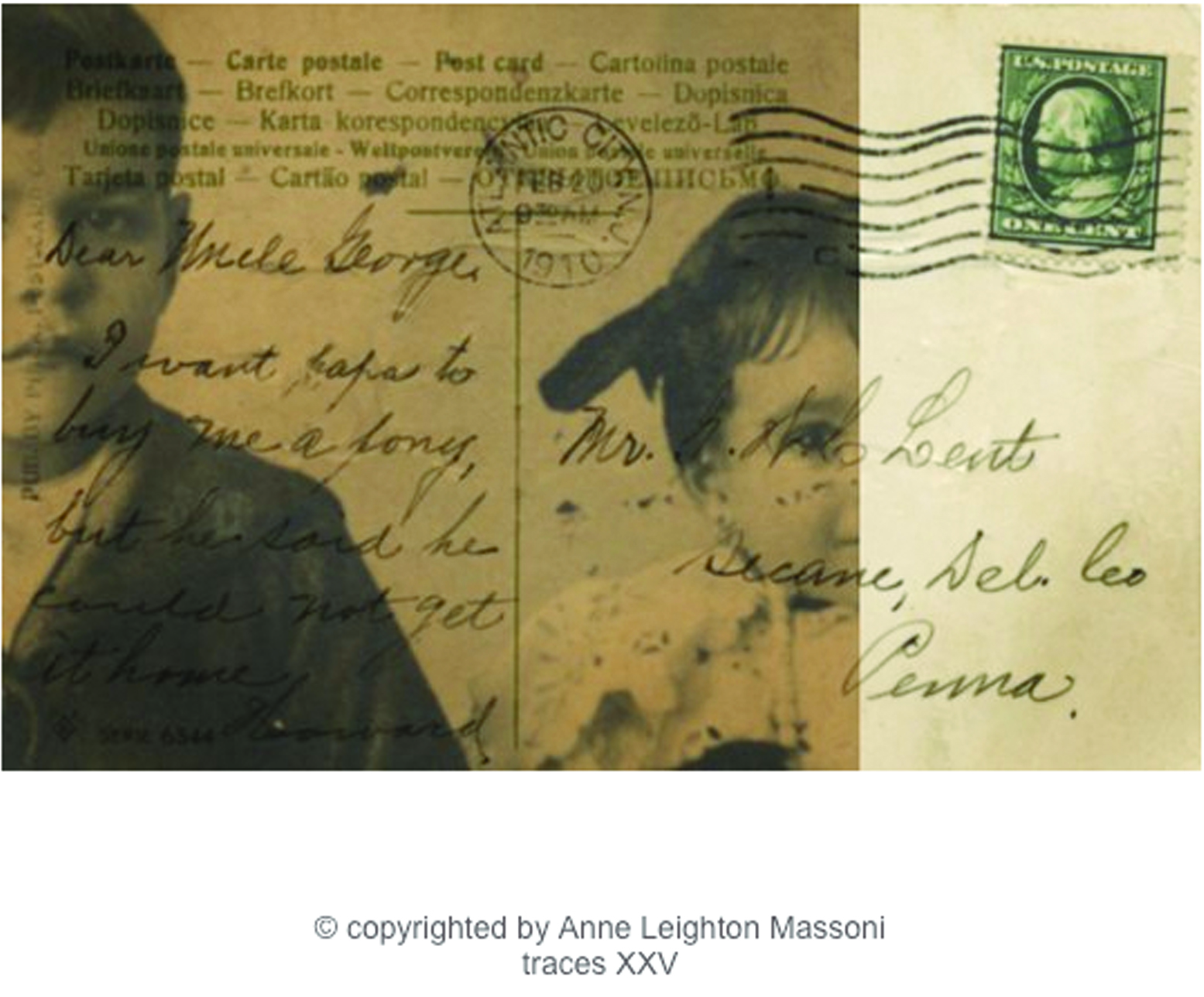
Her “Traces”series uses fragmented postcard images layered with recombined text to reveal traces of past lives. The text is layered over the images and placed on waxed digital prints. These fragments are the residue of forgotten people she says. The meaning of the place or time can’t be explained by the sender or receiver who are no longer here. “The forgotten relics of one’s life begin to resonate as the “Traces” of all of our lives,” Anne says in her website description.
Additional images of Anne’s constructed memories can be explored in more detail on her website: http://www.annemassoni.com.

All images are copyrighted by Anne Leighton Massoni
Collage, Communication, Layers and Memories

Through the magic of social media I recently rediscovered an Alpha Xi Delta sorority sister from my days at RIT. In a sorority that was mostly business and retailing majors, Joyce Hill and I were two of the few sisters who were Art & Design majors. We also happened to be in the same class. I hadn’t seen Joyce’s artwork since those days in the late 1960s. The collage work she has been producing in recent years is inspiring and begs a closer look.

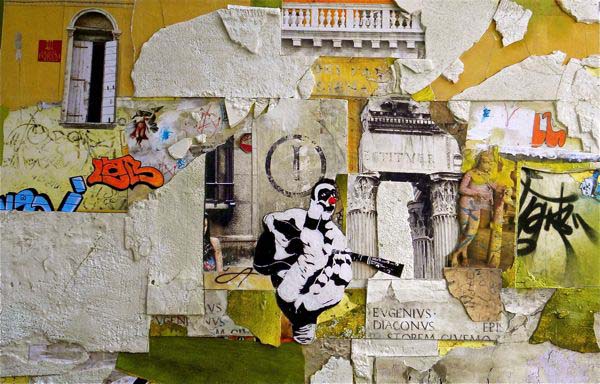
She is fascinated by communication her artist’s statement says. Her recent works are based on graffiti she saw traveling down narrow alleys in Italy. Her work “Guitarman”
uses layers of photos and what appears to be paper textured like the ancient walls she walked by.

The crumbling ruins of the L.A. Zoo provided more inspiration for her graffiti-based layered works. “Local graffiti artists had been in these areas before me. The walls were covered with colorful markings, words and images. Some of these I could not understand but was still amazed at their beauty. Communication is not just the expression of words but in its simplest form is the transfer of thoughts through images,” Joyce said.

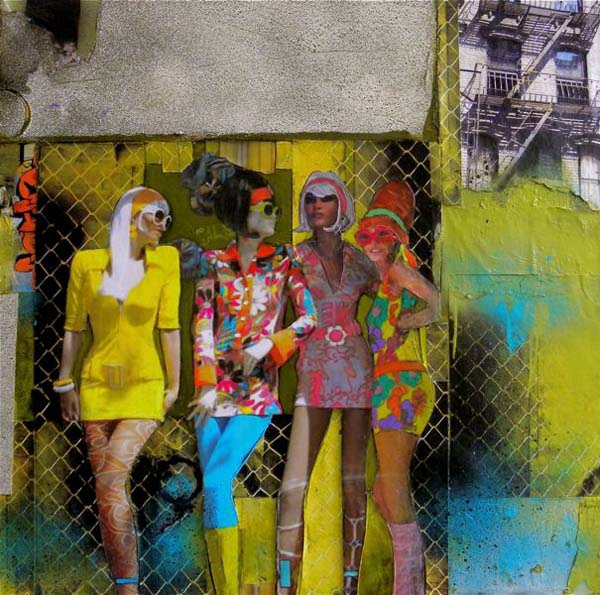
I admire artist’s like Joyce who work with layers of images and associated memories. Her work, “Hipsters’ Night Out” is an example of layered artwork I feel can evoke one’s own memories. In this case, of fun-filled evenings with friends.

You too maybe can relive old memories and enjoy Joyce M. Hill’s wonderful layered collages at: http://joycehillstudio.com/.


All images are copyrighted by Joyce M. Hill.

Enjoying Sandy Skoglund’s Work

Sandy Skogland was the artist who first caused me to think about the artwork making process as meditative. She is a conceptual artist who deals with repetitive, process-oriented art production. In the Spring of 2002 her installations and photographs were on exhibit at the Memorial Art Gallery in Rochester, New York. I had the opportunity to ask Sandy if she found the obsessively repetitive process of creating her work to be a meditative one. She said that she hadn’t really thought about it that way but certainly did.

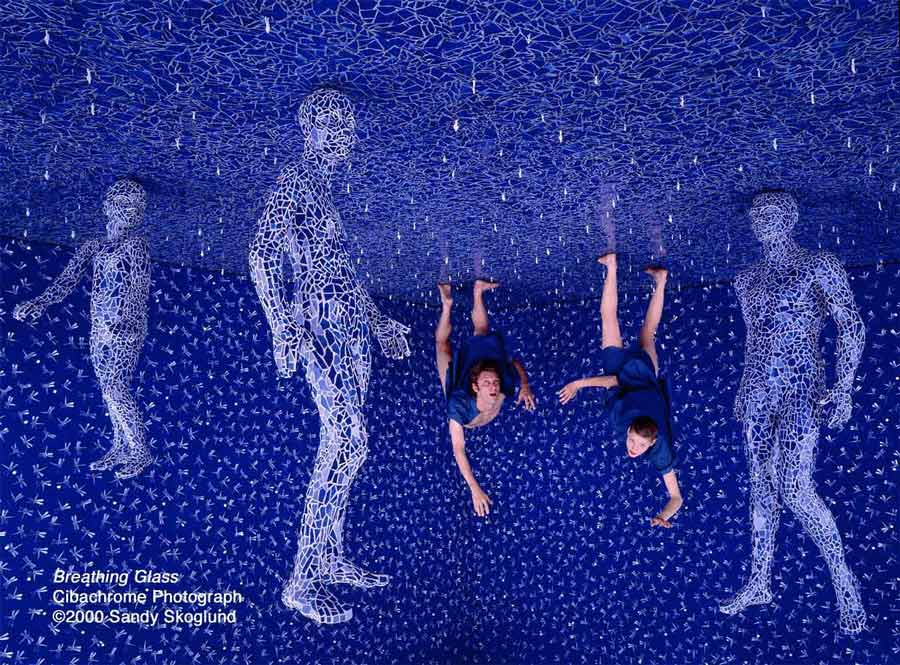
Her room-sized “Breathing Glass” installation was a perfect example of her repetitive process, affixing thousands of multiple small objects on a shape. This installation was comprised of thousands of individually lamp-worked glass dragonflies on wires protruding through an ethereal blue wall, interconnected by a wire grid mechanized to randomly vibrate. Miniature upside-down plastic figures floated on wires above a low, elevated platform in front of the wall. A bench was placed facing her installation where one sat and waited with suspenseful anticipation for the vibrations to start. Patience paid off as the sound of delicately tinkling glass was heard as the butterflies fluttered amidst miniature marshmallows. On an adjacent wall hung one of her signature Cibachrome photograph of the installation.

Sandy is known for creating room-sized installations she uses to stage her photographs with real people placed in them. Her “Breathing Glass” photograph shows the glass dragonflies in a weightless room of blue. The floor and ceiling are not what we usually experience. Are the humans dressed in blue standing on the ceiling? Are the mirror covered mannequins standing on their heads?

As well as relating to the repetitive process used to cover the forms in her work, I was able to visually relate to this inverted space. When I was a child I used to lie on the floor, look up and pretend the ceiling was the floor. I imagined what it was like to step over the tops of doorways and duck under the tables, lamps, sofa and piano. Looking at Sandy’s photograph evokes those old feelings of warping reality while moving around upside-down figures. This is the link to see the photo in more detail:
http://www.sandyskoglund.com/pages/recent/glass/bgphoto.html.

The wall of shimmering glass dragonflies now hangs at the University of Miami’s Lowe Art Museum. Thanks to an anonymous donor the artwork is on permanent view for visitors. For those of us who can’t get there and are interested in her work there are great photos on her website: http://www.sandyskoglund.com/.

All images are copyrighted by Sandy Skoglund.

Artwork as Meditation

Another artist who creates artworks with cascading cut-out shapes
is Pae White. I would love to closely examine some of her
installations. She explores movement in her works that remind me of
Calder mobiles on steroids. They are constructed of thousands of
brightly colored orbs of paper strung on colored string. Her
multiple-cut-paper artworks, similarly to Fox’s, seem to define the
three-dimensional space they are installed in.

Pae’s video on You Tube is fascinating to watch. Her site specific
projects, she says, incorporate the architecture of a space.
(www.youtube.com/watch?v=sWZaTIJec0w)
Her approach to artmaking starts with the space and features it
to pay tribute to it. Surrounded by her 2009 Venice Biennial
installation in its voluminous 13th century Arsenale space on
the video, she explains this approach. Her process she describes
as meditative. Constructing this installation’s imaginary aviary with
bird-seed encrusted chandeliers and brightly colored dropped ceiling
of string must certainly have been meditative.

Both Mark Fox and Pae White experience a meditative process as they
make their artworks. Artists often say their repetitive artmaking
process is meditative. I find my artmaking process is too.

Art Reflections

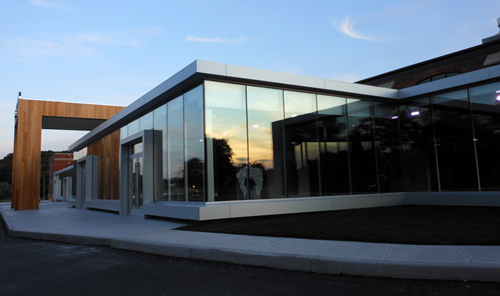
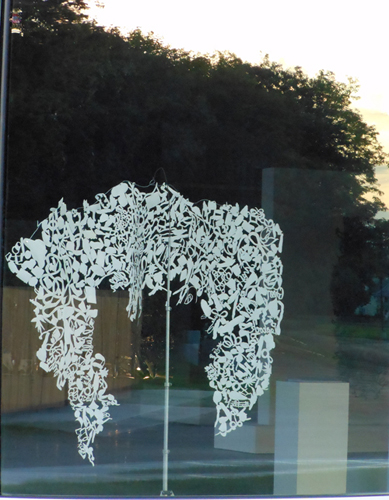
A colorful sunset inspired my return to the Culver Road Armory 
to photograph Mark Fox’s exhibit “Cut...ting Edge” as part of
the architecture seen through the glass walls of the gallery space.
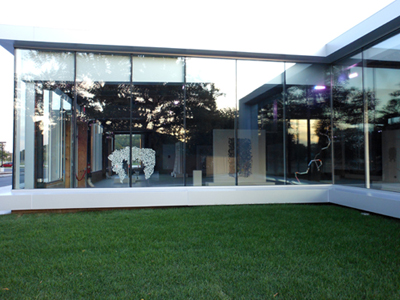
The organic shapes of his sculptures mimicked the reflected
tree shapes in the glass. Mark’s obsessively cut sculptures of
words appeared as part of the reflected shapes and shadows in
the glass. I was able to enjoy his work from a different view point.
The works as part of the architecture are still beautiful,
just in another way. 


The secrets of his construction are discovered when Mark’s
artworks are looked at closely. Unseen glue and wires are
hidden in the multiple layers of words tumbling over words,
holding the layers together. It is inspirational to explore
the construction methods he uses. I look forward to examining
them one more time before the show ends.

Welcome!

As an artist living and working in Rochester, New York I have always been fascinated by the reuse of old buildings. If you live anywhere in the area you should check out what a transformation the Culver Road Armory has gone through. It is a wonderful example of reuse, especially the pop-up gallery Deborah Ronnen created to show Mark Fox’s sculptural drawings. Deborah, owns Deborah Ronnen Fine Arts and is bringing the works of a number of important contemporary artists like Mark to Rochester. The huge open space with floor-to-ceiling glass walls is the perfect location for the installation of his work.

Mark Fox - "Unititled Last Rights"

His work is even more fascinating to look at up close. Mark’s use of intricately cut out text, assembled and tumbling over itself was a delight to explore. Enjoying the opportunity to have a glass of wine and study his work at the opening this past Saturday felt like being at a New York City gallery opening – not the usual Rochester event. It is certainly an exhibit you should try to see while it is here. Check out Mark’s intricate works on his website:
http://www.markfoxstudio.com

I hope you enjoy his work as much as I do.